Shot in Camp, Miles From Help: What a Hunting Tragedy Teaches About Backcountry Medicine
On Saturday night, October 17, a hunting party camped near Moose Creek and Haystack Road outside Salmon, Idaho, heard a single gunshot from inside one of their wall tents.
Inside was a 31-year-old hunter from Kokomo, Indiana. According to the Lemhi County Sheriff's Office, he had been changing his clothes when his handgun discharged and struck him in the chest.
His friends did what they could. They dressed the wound and called 911. He was conscious and alert, but having a hard time breathing.
Air Idaho Life Flight, Salmon Ambulance, sheriff's deputies, and a Salmon city officer were all dispatched. By the time they reached him, he had lost consciousness and had no pulse. A deputy performed life-saving measures, but he was pronounced dead at the scene. The incident is still under investigation. (East Idaho News has the full report.)
Our hearts go out to his family and to the friends who were with him in that camp.
First, What We Don't Know
We want to be careful here. We don't know where the bullet went, what it damaged, what his friends had on hand, or how long it took help to arrive. Some gunshot wounds to the chest aren't survivable even when they happen in the parking lot of a trauma center. Nothing in this article is a judgment of the people in that camp. They were there, they acted, and we weren't.
But the details that were reported line up with a situation every hunter, camper, and backcountry traveler should think through before it happens: a penetrating chest wound, a conscious patient who is struggling to breathe, and help that is a long way off.
Distance Changes Everything
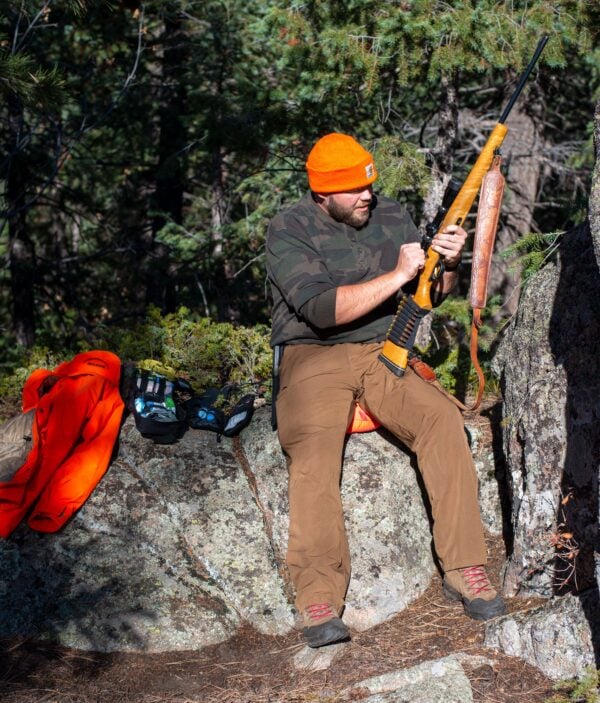
In town, the gap between injury and professional care is usually measured in minutes. At a hunting camp at the end of a forest road, after dark, it can be much longer, even when the helicopter launches right away.
Research backs this up. A 2017 study in JAMA Surgery looked at injured patients served by 911 EMS agencies across urban and rural regions. Among the patients who died, about 90% of rural deaths happened within the first 24 hours, compared with 64% of urban deaths. Rural trauma deaths tend to happen early, before the patient ever reaches definitive care.
That is the reality of backcountry medicine. When help is far away, your camp is the first emergency room, and the people around the fire are the first responders. Your level of preparedness has to rise to match the distance.
Why a Chest Wound Makes It Hard to Breathe
When something punches a hole in the chest wall, a few different problems can follow. Some of them a trained layperson can do something about. Some of them they can't.
- Open pneumothorax (a “sucking chest wound”). Air gets pulled in through the hole instead of through the airway, and the lung on that side can't inflate properly. A chest seal closes the hole so the lung can work again.
- Tension pneumothorax. Air keeps leaking into the chest cavity with nowhere to go. Pressure builds, the lung collapses, and eventually the pressure squeezes the heart and the great vessels so blood can't return to the heart. Breathing gets worse, and the patient can crash fast. This is a leading cause of preventable death from chest trauma. A vented chest seal is your tool here too: it stops more air from being sucked in through the wound, and its one-way valve lets trapped air escape. If pressure still builds, “burping” the seal can relieve it. A seal can't stop air leaking from inside a damaged lung, though, which is why you keep watching after it's on.
- Bleeding inside the chest. Damage to the lung, heart, or major blood vessels can cause blood loss you can't see and can't put pressure on. This patient needs a surgeon, and the only field treatment is getting them to one as fast as possible.
From the outside, you often can't tell which one you're dealing with. What you can do is treat what's treatable and buy time for the rest. (For a deeper dive, watch Why Vented Chest Seals Are the Best Choice for Treating Pneumothorax.)
What a Prepared Layperson Can Do
These are the core steps taught in civilian trauma courses and drawn from Tactical Combat Casualty Care (TCCC) guidance. Reading them is not the same as training on them, but here's the picture:
- Make the scene safe. In a camp shooting, that means making sure the firearm is secured before you focus on the patient.
- Call for help early and be specific. Give exact coordinates if you have them, and send someone to guide responders in or mark a landing area if it's safe to do so.
- Find every hole. Expose the chest and check the back, sides, and armpits. A bullet that goes in usually has to go somewhere, and an exit wound is easy to miss on a patient lying on a cot or a sleeping bag.
- Seal the chest. Cover each wound to the chest or upper back with a chest seal. TCCC guidelines call for a vented chest seal first, and a non-vented seal if that's all you have. A standard gauze pad and tape won't make an airtight seal, which is exactly what a chest seal exists to do.
- Watch for tension. If breathing gets worse after the seal goes on, with increasing distress, faster breathing, growing anxiety or confusion, or a weakening pulse, TCCC guidance says to “burp” the seal by lifting an edge to let trapped air escape, or remove it. Needle decompression is another treatment for tension pneumothorax, but it is beyond civilian scope. It belongs to paramedics, medics, and physicians.
- Keep them warm and keep reassessing. Shock and hypothermia feed each other, especially on an October night in the mountains. Get them off the ground, cover them with an emergency blanket, and keep checking breathing and pulse until help takes over.
Want to see it done? Combat medic Dennis Lyons walks through sucking chest wounds and chest seals here:
None of that guarantees a good outcome. But every step on that list requires something to be within reach: a chest seal, a blanket, shears to cut away clothing, and someone who has practiced.
A Trail Kit Isn't a Camp Kit
Most of us carry something light on the trail: a tourniquet, some gauze, maybe a chest seal. That's the right call when every ounce counts. But base camp is where you can afford to carry more, and it's where a lot of hunting accidents happen: cleaning rifles, handling firearms in tight quarters, splitting wood, working with knives and saws, cooking over open flame, and getting in and out of trucks and ATVs in the dark. (We break down the most frequent ones in 3 Most Common Hunting Injuries.)
That's why we built the Basecamp Trauma and First-Aid Kit. It's too big for a day pack and built to stay at camp or in the truck. Inside:
- Two HyFin Vent Compact chest seals from North American Rescue. Two, because a gunshot wound to the chest can have both an entry and an exit.
- Two C-A-T tourniquets in external pouches, plus a SWAT-T backup
- ChitoGauze hemostatic dressing, compressed gauze, and an OLAES pressure bandage
- A nasopharyngeal airway, a Burntec burn dressing, and a moldable splint
- Trauma shears, gloves, a mylar rescue blanket, a marker for noting tourniquet times, and a stocked everyday first-aid pack
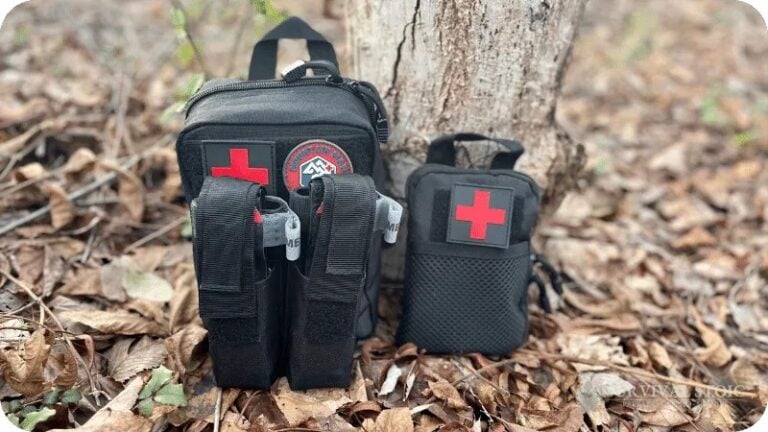
The Basecamp and Tracker kits. Image courtesy of Survival Stoic.
Pair it with our lightweight Tracker Trauma Kit for the trail. The Tracker gets you back to camp. The Basecamp helps get you back to civilization. For more on building out hunting medical gear, see Trauma Kits: The Most Essential Gear for Big Game Hunting and Top 5 Items: Hunter IFAK, or watch Trauma Kit Essentials for Hunting Season and our Tracker kit review.
Gear Is Half the Equation
A chest seal in the bag doesn't help if nobody in camp knows how to find the wound, seal it, and watch for tension. The skills aren't complicated, but they need to be learned before the night you need them.
- Emergency Trauma Response (free). Our online video course for civilians preparing for trauma emergencies.
- Range Medicine. Taught by combat medics Dennis Lyons and Brian McLaughlin, covering gunshot wounds, chest seals, and wound packing.
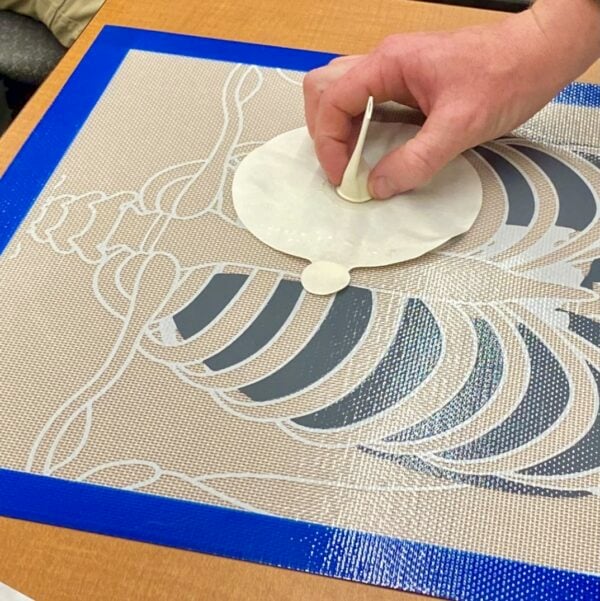
- The Mountain Man Chest Seal Trainer. Practice applying and burping a chest seal on something other than a real patient. Here's why we built it.
A Few Camp Rules Worth Adopting
- Know how you'll call for help. If there's no cell signal where you camp, bring a satellite messenger or a personal locator beacon, and make sure more than one person knows how to use it.
- Everyone knows where the kit is. Brief your group on the first night. A kit nobody can find in the dark might as well be at home. And if you're ever caught without one, know how to improvise a seal for a sucking chest wound.
- Treat firearm handling in camp seriously. We don't know the details of what happened in Idaho, and it's still under investigation. As a general rule, though, a handgun should stay in a holster that fully covers the trigger guard, or be safely stowed, whenever you're changing clothes, getting into a sleeping bag, or moving around in a cramped tent.
Out there, the distance between you and help is part of the plan whether you account for it or not. Account for it.
Stay safe,
The Mountain Man Medical Team
This article is for general educational purposes and isn't a substitute for hands-on medical training. Get trained, practice regularly, and always call 911 in an emergency.
Sources